

Person
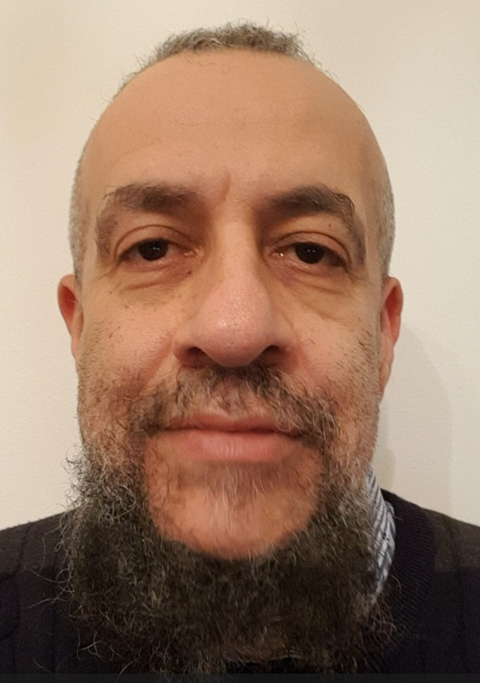
MORASCA SANDRO
Docenti di ruolo di Ia fascia
Course Catalogue:
Communications
Overview
Sandro Morasca has been a Full Professor of Computer Engineering since 2000 and serves at the Dipartimento di Scienze Teoriche e Applicate (DiSTA) at the Università degli Studi dell'Insubria.
He graduated (with honors) in Electronic Engineering from the Politecnico di Milano in 1985.
He received his PhD in Electronic and Systems Engineering from the Politecnico di Milano in 1991. He was then a Research Assistant and Visiting Scientist in the Computer Science Department at the University of Maryland at College Park. He subsequently served as a Research Assistant (1993–1998) and Associate Professor (1998–2000) at the Como campus of the Politecnico di Milano.
Sandro Morasca carries out research in Empirical Software Engineering, Software Quality, Machine Learning, Software Verification, Open Source Software, and the Specification of Concurrent and Real-Time Software Systems. He has published over 40 articles in scientific journals and over 100 papers in conference proceedings. He has participated in several national and international projects and has served on the program committees and editorial boards of international software engineering conferences and journals.
Description
Sandro Morasca has been a Full Professor of Computer Engineering since 2000 and serves at the Dipartimento di Scienze Teoriche e Applicate (DiSTA) at the Università degli Studi dell'Insubria.
He graduated (with honors) in Electronic Engineering from the Politecnico di Milano in 1985.
He received his PhD in Electronic and Systems Engineering from the Politecnico di Milano in 1991. He was then a Research Assistant and Visiting Scientist in the Computer Science Department at the University of Maryland at College Park. He subsequently served as a Research Assistant (1993–1998) and Associate Professor (1998–2000) at the Como campus of the Politecnico di Milano.
Sandro Morasca carries out research in Empirical Software Engineering, Software Quality, Machine Learning, Software Verification, Open Source Software, and the Specification of Concurrent and Real-Time Software Systems. He has published over 40 articles in scientific journals and over 100 papers in conference proceedings. He has participated in several national and international projects and has served on the program committees and editorial boards of international software engineering conferences and journals.
BIBLIOMETRIC INDICES
Up to May 2026, the works Sandro Morasca has co-authored have received a total of
- 6792 citations, with h-index equal to 38, according to Google Scholar
- 3,215 citations (with 132 indexed articles), with h-index equal to 26, according to Scopus.
RESEARCH
Sandro Morasca’s research contributions to Software Engineering areas are summarized below.
- Empirical Software Engineering.
-- Case studies on software fault-proneness and development effort. Existing measures were used to predict the number of faults in software modules and the effort needed to develop them, based on industrial software systems. In addition to building useful prediction models, the goal of this research was to evaluate the practical usefulness of measures (such as Function Points) from the literature.
-- Definition of measures for the early artifacts in the lifecycle. This research contributed to filling a gap in the existing literature on software measurement, which almost entirely focused on software code. New measures were defined for software specifications and designs, and empirical studies on industrial systems were carried out to find which design and specification factors mostly influence fault-proneness and effort.
-- Theoretical validation of software measures. A reference systematic axiomatic approach was proposed for the definition of sensible measures for the many artifacts (not only software code) produced during the software life cycle. The approach can be used to guide the definition of measures and the verification that a measure actually quantifies the attribute it purports to measure.
-- Web measurement. Empirical studies were carried out to identify which factors influence the effort needed to design a Web application.
-- Web Service quality. A notation for introducing quality characteristics in web services has been defined and empirical studies have been carried out to estimate the quality of Web Services.
-- Technical Debt. A Measurement Theory-based framework has been proposed for the correct definition and measurement of Technical Debt.
-- Evaluation of Open Source Software. A new, comprehensive model for the evaluation of Open Source Software was proposed and a preliminary validation was carried out. In addition, empirical studies have been performed for assessing the trustworthiness of Open Source Software.
-- Software Engineering education and empirical methods. Four stakeholders were identified in the several empirical software engineering that use students as subjects: students, instructors, researchers, and industry. Costs and benefits for them were identified, and guidelines were provided to carry out empirical studies effectively for all stakeholders.
-- Software understandability. The existing measures were thoroughly analyzed and their correlation with understandability was assessed.
- Innovative data analysis techniques. New data analysis techniques were proposed and empirically assessed, including
-- a "hybrid" technique, i.e., the combination of two existing techniques
-- an extension of Classification Trees applied with continuous independent variables
-- methods for defining thresholds for classifying software modules as faulty
-- new methods for evaluating ROC curves.
- Specification of Concurrent and Real-time Software Systems.
-- High-level timed Petri nets. A new high-level timed Petri net model (ER Nets) was proposed that combines both functional and timing aspects in the modeling of concurrent and time-dependent systems. The model was formally specified and it generalized the existing models in the literature.
- Software Verification.
-- Operational models. Testing, symbolic execution, and reachability analysis techniques were defined for the ER Net model.
-- Logic-based models. Based on the temporal logic language TRIO, algorithms for the (semi)automatic derivation of test cases "in the small" and "in the large," i.e., for modular, hierarchical, real-time software systems. Coverage criteria were defined to assess the quality of the generated test data. Automated tools were implemented to support the proposal.
-- Mutation analysis. Mutation analysis, usually applied to sequential programs, was extended to concurrent programming. Ada was taken as the reference language and a number of specific mutant operators were defined for the language's concurrent constructs.
-- Stopping rules for testing. A Bayesian approach was introduced, based on the idea that testing actually stops when testers have reached a sufficient degree of belief in a program's correctness. A model was proposed to describe how this degree of belief varies over the test process, and an empirical study provided evidence supporting the initial hypotheses.
-- Analytical models. A theoretical study was carried out to identify the least restrictive necessary and sufficient conditions for rationally allocating test data across the input subdomains of a software program, based on the only knowledge of the ordering of the failure rates of the subdomains. An approach was also proposed for assessing the mean failure frequency of a program, based on the statistical test of hypotheses.
-- Model-driven verification of software for Web systems. The generation of test data for a Web application generator has been investigated. The test data are Web application models coded in WebML. Different application models exercise different productions of the WebML grammar, so coverage measures have been defined for these productions. An empirical analysis in an industrial environment has allowed the study of how well the test data exercise the entire grammar.
PROJECTS
Sandro Morasca has participated in several projects.
National projects: Progetto MPI 40% "Reti di Petri: modelli, applicazioni, strumenti," Progetto MPI 60% "Strumenti per la specifica e la verifica di sistemi software in tempo reale", Progetto CINI "PROTAGORA", Progetto cofinanziato MURST "MOSAICO", Progetto cofinanziato MIUR "QUACK."
International EU-funded projects: "IPTES" (ESPRIT), "CEMP" (ESSI), "PROMOTE" (ESSI), "ESERNET" (IST, Thematic Network), "QualiPSo" (IST, Integrated Project), and "S-CASE" (IST, STREP).
TUTORIALS AND KEYNOTES
Sandro Morasca has presented the following tutorials: "Formal Methods in Software Measurement and Software Measurement in Formal Methods" (at the international conferences METRICS 2003 and Formal Methods Europe 2003), "An Introduction to Web Quality" (at the International Conference on Web Engineering 2004, with Luciano Baresi), and "Fundamental Aspects of Empirical Software Engineering" (at the international conference ESELAW 2007).
Sandro Morasca has delivered keynote speeches at the international conferences OSS 2007, ESELAW 2007, SAST 2008, IWPSE 2015, and IDoESE 2025.
REVIEWING ACTIVITIES
Sandro Morasca has served on the PC of a number of international software engineering conferences, including “International Conference on Evaluation and Assessment in Software Engineering” (EASE), “International Symposium on Empirical Software Engineering and Measurement” (ESEM), "Fundamental Approaches in Software Engineering" (FASE), "International Conference on Software Engineering and Software Engineering" (SEKE), the "International Conference on Software Maintenance" (ICSM), "International Conference on Web Engineering" (ICWE), "International Symposium on Empirical Software Engineering" (ISESE), "International Symposium on Software Reliability Engineering" (ISSRE), "International Symposium on Software Metrics" (METRICS), "International Conference on Open Source Systems" (OSS), "Symposium on Applied Computing" (SAC).
He served on the Editorial Board of the international journal "Empirical Software Engineering: An International Journal."
He was guest editor of a Special Issue on Knowledge Discovery from Software Engineering Data of the International Journal of Software Engineering and Knowledge Engineering.
He is guest editor of a Special Issue of the international journal "Empirical Software Engineering: An International Journal," based on Registered Reports.
CONFERENCE CHAIRS AND STEERING COMMITTEES
Sandro Morasca was the Program Chair for the following scientific events: "Workshop on Measuring Object-Oriented Software" (at ECOOP'98), "First International Workshop on Web Quality" (with Luciano Baresi, at ICWE 2004), a Workshop on "Measurement and Metrics" (with Luciano Baresi and Emilia Mendes, at WWW 2005), "1st International Workshop on Trust in Open Source Software" (with Alberto Sillitti, at OSS 2007), ICSEA 2007, "Second International Doctoral Symposium on Empirical Software Engineering" (held as a part of the International Empirical Software Engineering Week 2007).
He has served on the Steering Committees of the METRICS and ESEM international conferences.
CONFERENCE ORGANIZATION
Sandro Morasca has participated in the organization of the following conferences as:
- Finance Chair of the IEEE and ACM "Sixth International Workshop on Software Specification and Design"
- Organizing Committee Member of "Congresso AICA" 2001
- General Chair of METRICS 2005.
MEMBER OF MINISTERIAL COMMITTEES
Sandro Morasca was a member of the Committee on Open Source Software of the Italian "Ministero per le Riforme e le Innovazioni nella Pubblica Amministrazione."
He graduated (with honors) in Electronic Engineering from the Politecnico di Milano in 1985.
He received his PhD in Electronic and Systems Engineering from the Politecnico di Milano in 1991. He was then a Research Assistant and Visiting Scientist in the Computer Science Department at the University of Maryland at College Park. He subsequently served as a Research Assistant (1993–1998) and Associate Professor (1998–2000) at the Como campus of the Politecnico di Milano.
Sandro Morasca carries out research in Empirical Software Engineering, Software Quality, Machine Learning, Software Verification, Open Source Software, and the Specification of Concurrent and Real-Time Software Systems. He has published over 40 articles in scientific journals and over 100 papers in conference proceedings. He has participated in several national and international projects and has served on the program committees and editorial boards of international software engineering conferences and journals.
BIBLIOMETRIC INDICES
Up to May 2026, the works Sandro Morasca has co-authored have received a total of
- 6792 citations, with h-index equal to 38, according to Google Scholar
- 3,215 citations (with 132 indexed articles), with h-index equal to 26, according to Scopus.
RESEARCH
Sandro Morasca’s research contributions to Software Engineering areas are summarized below.
- Empirical Software Engineering.
-- Case studies on software fault-proneness and development effort. Existing measures were used to predict the number of faults in software modules and the effort needed to develop them, based on industrial software systems. In addition to building useful prediction models, the goal of this research was to evaluate the practical usefulness of measures (such as Function Points) from the literature.
-- Definition of measures for the early artifacts in the lifecycle. This research contributed to filling a gap in the existing literature on software measurement, which almost entirely focused on software code. New measures were defined for software specifications and designs, and empirical studies on industrial systems were carried out to find which design and specification factors mostly influence fault-proneness and effort.
-- Theoretical validation of software measures. A reference systematic axiomatic approach was proposed for the definition of sensible measures for the many artifacts (not only software code) produced during the software life cycle. The approach can be used to guide the definition of measures and the verification that a measure actually quantifies the attribute it purports to measure.
-- Web measurement. Empirical studies were carried out to identify which factors influence the effort needed to design a Web application.
-- Web Service quality. A notation for introducing quality characteristics in web services has been defined and empirical studies have been carried out to estimate the quality of Web Services.
-- Technical Debt. A Measurement Theory-based framework has been proposed for the correct definition and measurement of Technical Debt.
-- Evaluation of Open Source Software. A new, comprehensive model for the evaluation of Open Source Software was proposed and a preliminary validation was carried out. In addition, empirical studies have been performed for assessing the trustworthiness of Open Source Software.
-- Software Engineering education and empirical methods. Four stakeholders were identified in the several empirical software engineering that use students as subjects: students, instructors, researchers, and industry. Costs and benefits for them were identified, and guidelines were provided to carry out empirical studies effectively for all stakeholders.
-- Software understandability. The existing measures were thoroughly analyzed and their correlation with understandability was assessed.
- Innovative data analysis techniques. New data analysis techniques were proposed and empirically assessed, including
-- a "hybrid" technique, i.e., the combination of two existing techniques
-- an extension of Classification Trees applied with continuous independent variables
-- methods for defining thresholds for classifying software modules as faulty
-- new methods for evaluating ROC curves.
- Specification of Concurrent and Real-time Software Systems.
-- High-level timed Petri nets. A new high-level timed Petri net model (ER Nets) was proposed that combines both functional and timing aspects in the modeling of concurrent and time-dependent systems. The model was formally specified and it generalized the existing models in the literature.
- Software Verification.
-- Operational models. Testing, symbolic execution, and reachability analysis techniques were defined for the ER Net model.
-- Logic-based models. Based on the temporal logic language TRIO, algorithms for the (semi)automatic derivation of test cases "in the small" and "in the large," i.e., for modular, hierarchical, real-time software systems. Coverage criteria were defined to assess the quality of the generated test data. Automated tools were implemented to support the proposal.
-- Mutation analysis. Mutation analysis, usually applied to sequential programs, was extended to concurrent programming. Ada was taken as the reference language and a number of specific mutant operators were defined for the language's concurrent constructs.
-- Stopping rules for testing. A Bayesian approach was introduced, based on the idea that testing actually stops when testers have reached a sufficient degree of belief in a program's correctness. A model was proposed to describe how this degree of belief varies over the test process, and an empirical study provided evidence supporting the initial hypotheses.
-- Analytical models. A theoretical study was carried out to identify the least restrictive necessary and sufficient conditions for rationally allocating test data across the input subdomains of a software program, based on the only knowledge of the ordering of the failure rates of the subdomains. An approach was also proposed for assessing the mean failure frequency of a program, based on the statistical test of hypotheses.
-- Model-driven verification of software for Web systems. The generation of test data for a Web application generator has been investigated. The test data are Web application models coded in WebML. Different application models exercise different productions of the WebML grammar, so coverage measures have been defined for these productions. An empirical analysis in an industrial environment has allowed the study of how well the test data exercise the entire grammar.
PROJECTS
Sandro Morasca has participated in several projects.
National projects: Progetto MPI 40% "Reti di Petri: modelli, applicazioni, strumenti," Progetto MPI 60% "Strumenti per la specifica e la verifica di sistemi software in tempo reale", Progetto CINI "PROTAGORA", Progetto cofinanziato MURST "MOSAICO", Progetto cofinanziato MIUR "QUACK."
International EU-funded projects: "IPTES" (ESPRIT), "CEMP" (ESSI), "PROMOTE" (ESSI), "ESERNET" (IST, Thematic Network), "QualiPSo" (IST, Integrated Project), and "S-CASE" (IST, STREP).
TUTORIALS AND KEYNOTES
Sandro Morasca has presented the following tutorials: "Formal Methods in Software Measurement and Software Measurement in Formal Methods" (at the international conferences METRICS 2003 and Formal Methods Europe 2003), "An Introduction to Web Quality" (at the International Conference on Web Engineering 2004, with Luciano Baresi), and "Fundamental Aspects of Empirical Software Engineering" (at the international conference ESELAW 2007).
Sandro Morasca has delivered keynote speeches at the international conferences OSS 2007, ESELAW 2007, SAST 2008, IWPSE 2015, and IDoESE 2025.
REVIEWING ACTIVITIES
Sandro Morasca has served on the PC of a number of international software engineering conferences, including “International Conference on Evaluation and Assessment in Software Engineering” (EASE), “International Symposium on Empirical Software Engineering and Measurement” (ESEM), "Fundamental Approaches in Software Engineering" (FASE), "International Conference on Software Engineering and Software Engineering" (SEKE), the "International Conference on Software Maintenance" (ICSM), "International Conference on Web Engineering" (ICWE), "International Symposium on Empirical Software Engineering" (ISESE), "International Symposium on Software Reliability Engineering" (ISSRE), "International Symposium on Software Metrics" (METRICS), "International Conference on Open Source Systems" (OSS), "Symposium on Applied Computing" (SAC).
He served on the Editorial Board of the international journal "Empirical Software Engineering: An International Journal."
He was guest editor of a Special Issue on Knowledge Discovery from Software Engineering Data of the International Journal of Software Engineering and Knowledge Engineering.
He is guest editor of a Special Issue of the international journal "Empirical Software Engineering: An International Journal," based on Registered Reports.
CONFERENCE CHAIRS AND STEERING COMMITTEES
Sandro Morasca was the Program Chair for the following scientific events: "Workshop on Measuring Object-Oriented Software" (at ECOOP'98), "First International Workshop on Web Quality" (with Luciano Baresi, at ICWE 2004), a Workshop on "Measurement and Metrics" (with Luciano Baresi and Emilia Mendes, at WWW 2005), "1st International Workshop on Trust in Open Source Software" (with Alberto Sillitti, at OSS 2007), ICSEA 2007, "Second International Doctoral Symposium on Empirical Software Engineering" (held as a part of the International Empirical Software Engineering Week 2007).
He has served on the Steering Committees of the METRICS and ESEM international conferences.
CONFERENCE ORGANIZATION
Sandro Morasca has participated in the organization of the following conferences as:
- Finance Chair of the IEEE and ACM "Sixth International Workshop on Software Specification and Design"
- Organizing Committee Member of "Congresso AICA" 2001
- General Chair of METRICS 2005.
MEMBER OF MINISTERIAL COMMITTEES
Sandro Morasca was a member of the Committee on Open Source Software of the Italian "Ministero per le Riforme e le Innovazioni nella Pubblica Amministrazione."
Concepts (2)
Overview
Empirical Software Engineering, Software Quality, Machine Learning, AI for Software Engineering, Software Engineering for AI, Software Verification, Open Source Software, and Specification of Concurrent and Real-time Software Systems
No Results Found
Member of
Collaborates with
Publications (159)
Fellowship
fs2 – Socio/a effettivo o corrispondente
- Association for Computing Machines (Stati Uniti)
(2010 - )
2010
No Results Found
Editorial Board
Associate Editor di rivista o collana editoriale - EMPIRICAL SOFTWARE ENGINEERING - ISSN: 1382-3256 - Springer Netherlands (2002 - 2015)
2002
No Results Found
Congresses (27)
Program committee (membro del comitato scientifico) - ESEM '26: ACM / IEEE International Symposium on Empirical Software Engineering and Measurement, Monaco (Germania), 7-9 ottobre 2026 (07/10/2026 - 09/10/2026) 20261007
Program committee (membro del comitato scientifico) - ESEM '23: ACM / IEEE International Symposium on Empirical Software Engineering and Measurement, New Orleans, USA, October 1-3, 2023 (25/10/2025 - 27/10/2025) 20251025
Program committee (membro del comitato scientifico) - ESEM '25: ACM / IEEE International Symposium on Empirical Software Engineering and Measurement, Honolulu, USA, October 1-3, 2025 (01/10/2025 - 03/10/2025) 20251001
Program committee (membro del comitato scientifico) - ESEM '24: ACM / IEEE International Symposium on Empirical Software Engineering and Measurement, Barcelona, Spain, October 22-24, 2024 (22/10/2024 - 24/10/2024) 20241022
Program committee (membro del comitato scientifico) - FSE 2024 ACM International Conference on the Foundations of Software Engineering, Porto de Galinhas, Brazil, July 15-19, 2024 (15/07/2024 - 19/07/2024) 20240715
Program committee (membro del comitato scientifico) - EASE 2024 International Conference on Evaluation and Assessment in Software Engineering, Salerno, Italy, June 18-21, 2024 (18/06/2024 - 21/06/2024) 20240618
Program committee (membro del comitato scientifico) - EASE 2023 International Conference on Evaluation and Assessment in Software Engineering, Oulu, Finland, June 13-16, 2023 (13/06/2023 - 16/06/2023) 20230613
Program committee (membro del comitato scientifico) - ESEM '22: ACM / IEEE International Symposium on Empirical Software Engineering and Measurement, Helsinki, Finland, October 21-23, 2022 (21/10/2022 - 23/10/2022) 20221021
Program committee (membro del comitato scientifico) - Product-Focused Software Process Improvement - 22nd International Conference, PROFES 2021, Turin, Italy, November 26, 2021. (26/11/2021 - 26/11/2021) 20211126
Program committee (membro del comitato scientifico) - ESEM '21: ACM / IEEE International Symposium on Empirical Software Engineering and Measurement, Bari, Italy, October 11-15, 2021 (11/10/2021 - 15/10/2021) 20211011
Program committee (membro del comitato scientifico) - Quality of Information and Communications Technology - 14th International Conference, QUATIC 2021, Algarve, Portugal, September 8-11, 2021 (08/09/2021 - 11/09/2021) 20210908
Program committee (membro del comitato scientifico) - 2021 IEEE International Conference on Web Services, ICWS 2021, Chicago, IL, USA, September 5-10, 2021. (05/09/2021 - 10/09/2021) 20210905
Program committee (membro del comitato scientifico) - 47th Euromicro Conference on Software Engineering and Advanced Applications, SEAA 2021, Palermo, Italy, September 1-3, 2021. (01/09/2021 - 03/04/2022) 20210901
Program committee (membro del comitato scientifico) - 43rd IEEE/ACM International Conference on Software Engineering: New Ideas and Emerging Results, ICSE (NIER) 2021, Madrid, Spain, May 25-28, 2021. (25/05/2021 - 28/05/2021) 20210525
Program committee (membro del comitato scientifico) - Open Source Systems - 17th IFIP WG 2.13 International Conference, OSS 2021, Virtual Event, May 12-13, 2021, Proceedings (12/05/2021 - 13/05/2021) 20210512
Program committee (membro del comitato scientifico) - 2020 IEEE International Conference on Web Services, ICWS 2020, Beijing, China, October 19-23, 2020. (19/10/2020 - 23/10/2020) 20201019
Program committee (membro del comitato scientifico) - Quality of Information and Communications Technology - 13th International Conference, QUATIC 2020, Faro, Portugal, September 9-11, 2020, Proceedings. (09/09/2020 - 11/09/2020) 20200909
Program committee (membro del comitato scientifico) - 46th Euromicro Conference on Software Engineering and Advanced Applications, SEAA 2020, Portoroz, Slovenia, August 26-28, 2020. (26/08/2020 - 28/08/2020) 20200826
Program committee (membro del comitato scientifico) - ICSE '20: 42nd International Conference on Software Engineering, Workshops, Seoul, Republic of Korea, 27 June - 19 July, 2020. (27/06/2020 - 19/07/2020) 20200627
Program committee (membro del comitato scientifico) - Open Source Systems - 16th IFIP WG 2.13 International Conference, OSS 2020, Innopolis, Russia, May 12-14, 2020, Proceedings. (12/05/2020 - 14/05/2020) 20200512
Program committee (membro del comitato scientifico) - Quality of Information and Communications Technology - 12th International Conference, QUATIC 2019, Ciudad Real, Spain, September 11-13, 2019, Proceedings. (11/09/2019 - 13/09/2019) 20190911
Program committee (membro del comitato scientifico) - 45th Euromicro Conference on Software Engineering and Advanced Applications, SEAA 2019, Kallithea-Chalkidiki, Greece, August 28-30, 2019. (28/08/2019 - 30/08/2019) 20190828
Program committee (membro del comitato scientifico) - 2019 IEEE International Conference on Web Services, ICWS 2019, Milan, Italy, July 8-13, 2019. (08/07/2019 - 13/07/2019) 20190708
Program committee (membro del comitato scientifico) - 2nd International Workshop on Emerging Trends in Software Engineering for Blockchain, WETSEB@ICSE 2019, Montreal, QC, Canada, May 27, 2019. (27/05/2019 - 27/05/2019) 20190527
Program committee (membro del comitato scientifico) - Open Source Systems - 15th IFIP WG 2.13 International Conference, OSS 2019, Montreal, QC, Canada, May 26-27, 2019, Proceedings. (26/05/2019 - 27/05/2019) 20190526
Program committee (membro del comitato scientifico) - 12th ACM/IEEE International Symposium on Empirical Software Engineering and Measurement, ESEM 2018, Oulu, Finland, October 11-12, 2018 (11/10/2018 - 12/10/2018) 20181011
Program committee (membro del comitato scientifico) - 2017 ACM/IEEE International Symposium on Empirical Software Engineering and Measurement, ESEM 2017, Toronto, ON, Canada, November 9-10, 2017 (09/11/2017 - 10/11/2017) 20171109
No Results Found
Doctoral college (21)
Università degli Studi INSUBRIA Varese-Como -
INFORMATICA E MATEMATICA DEL CALCOLO-2025
(cycle: 41 - Year: 2025
2025
)
Università degli Studi INSUBRIA Varese-Como -
INFORMATICA E MATEMATICA DEL CALCOLO-2024
(cycle: 40 - Year: 2024
2024
)
Università degli Studi INSUBRIA Varese-Como -
INFORMATICA E MATEMATICA DEL CALCOLO-2023
(cycle: 39 - Year: 2023
2023
)
Università degli Studi INSUBRIA Varese-Como -
INFORMATICA E MATEMATICA DEL CALCOLO-2022
(cycle: 38 - Year: 2022
2022
)
Università degli Studi INSUBRIA Varese-Como -
INFORMATICA E MATEMATICA DEL CALCOLO-2021
(cycle: 37 - Year: 2021
2021
)
Università degli Studi INSUBRIA Varese-Como -
INFORMATICA E MATEMATICA DEL CALCOLO-2020
(cycle: 36 - Year: 2020
2020
)
Università degli Studi INSUBRIA Varese-Como -
INFORMATICA E MATEMATICA DEL CALCOLO-2019
(cycle: 35 - Year: 2019
2019
)
Università degli Studi INSUBRIA Varese-Como -
INFORMATICA E MATEMATICA DEL CALCOLO-2018
(cycle: 34 - Year: 2018
2018
)
Università degli Studi INSUBRIA Varese-Como -
INFORMATICA E MATEMATICA DEL CALCOLO-2017
(cycle: 33 - Year: 2017
2017
)
Università degli Studi INSUBRIA Varese-Como -
INFORMATICA E MATEMATICA DEL CALCOLO-2016
(cycle: 32 - Year: 2016
2016
)
Università degli Studi INSUBRIA Varese-Como -
INFORMATICA E MATEMATICA DEL CALCOLO-2015
(cycle: 31 - Year: 2015
2015
)
Università degli Studi INSUBRIA Varese-Como -
INFORMATICA E MATEMATICA DEL CALCOLO-2014
(cycle: 30 - Year: 2014
2014
)
Università degli Studi INSUBRIA Varese-Como -
INFORMATICA E MATEMATICA DEL CALCOLO-2013
(cycle: 29 - Year: 2013
2013
)
Università degli Studi INSUBRIA Varese-Como -
INFORMATICA-2012
(cycle: 28 - Year: 2012
2012
)
Università degli Studi INSUBRIA Varese-Como -
INFORMATICA-2011
(cycle: 27 - Year: 2011
2011
)
Università degli Studi INSUBRIA Varese-Como -
INFORMATICA-2010
(cycle: 26 - Year: 2010
2010
)
Università degli Studi INSUBRIA Varese-Como -
INFORMATICA-2009
(cycle: 25 - Year: 2009
2009
)
Università degli Studi INSUBRIA Varese-Como -
INFORMATICA-2008
(cycle: 24 - Year: 2008
2008
)
Università degli Studi INSUBRIA Varese-Como -
INFORMATICA-2007
(cycle: 23 - Year: 2007
2007
)
Università degli Studi INSUBRIA Varese-Como -
INFORMATICA-2006
(cycle: 22 - Year: 2006
2006
)
Università degli Studi INSUBRIA Varese-Como -
INFORMATICA-2005
(cycle: 21 - Year: 2005
2005
)
No Results Found
Tutoring (2)
tutorship -
Dottorandi/e
- LENARDUZZI VALENTINA
tutorship -
Dottorandi/e
- TAIBI DAVIDE
No Results Found
Other titles
Presidente dei Corsi di Laurea in Informatica
(28/11/2018 - 27/11/2021)
20181128
No Results Found
Courses (7)
9 CFU
72 hours
9 CFU
90 hours
9 CFU
72 hours
9 CFU
72 hours
9 CFU
90 hours
8 CFU
72 hours
9 CFU
72 hours
No Results Found
Third Mission
Attività di coinvolgimento e interazione con il mondo della scuola (Organizzatore/Organizzatrice)
- Orientamento presso Istituti Superiori delle province di Como e Varese
19000101
DIPARTIMENTO DI SCIENZE TEORICHE E APPLICATE
No Results Found