

Person
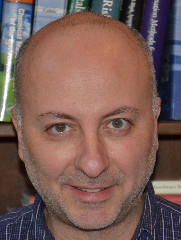
DI GUARDO ANTONIO
Docenti di ruolo di Ia fascia
Course Catalogue:
Communications
Overview
Description
Contact data
Full Professor
Department of Science and High Technology
University of Insubria
Via Valleggio 11 22100 COMO CO
Phone +39-031-2386480
E-mail: antonio.diguardo@uninsubria.it
Biography
Antonio Di Guardo received his degree in Agricultural Science in 1989, and a PhD in Chemistry, Biochemistry and Ecology of Pesticides in 1994, both from the University of Milan. He was a Post-Doctoral fellow at the University of Toronto, Canada (1994-1996) developing models to predict the fate of chemicals in the environment. He was Assistant Professor of Ecology at the University of Insubria (1996-2005) in Varese, Associate Professor of Ecology and Ecotoxicology at the University of Insubria in Como. As of 2020 he is full professor of Ecology and Ecotoxicology at the University of Insubria in Como.
His main object of research is the development of environmental fate models capable to describe and predict the multimedia pathways of organic chemicals in several environmental scenarios, such as evaluative, regional and site specific ones.
He was member of several national and international working groups and committees dealing with modeling issues: for instance the European Science Foundation Chemical Exposure Prediction Working Group, or the Society of Environmental Toxicology and Chemistry (SETAC) International Task Force on the Application of Fate Models to Regulatory Decision Making. In 2001 he was External Expert for the European Union CSTEE (Scientific Committee on Toxicity, Ecotoxicity and the Environment), assisting the revision of some modeling issues in the Technical Guidance Document (TGD) on Risk Assessment of New Chemicals. He is currently external consultant for APAT (Italian environmental protection agency) for environmental fate modelling issues.
Qualifications and awards
(1989) Degree in Agricultural Science from the University of Milan.
(1994) PhD in Chemistry, Biochemistry and Ecology of Pesticides from the University of Milan. Title of the Thesis: “Formulation, application and experimental validation of a model for predicting the fate of pesticides applied to soil and the contamination of surface waters”.
(2003) External examiner at the University of Lancaster (UK) for a PhD committee.
(2004) External examiner at the University of Siena for a PhD committee.
(2007) External examiner at the University of Siena for a PhD committee.
Research interests
The scientific activity of Antonio Di Guardo, in the field of ecological disciplines, is placed in the field of ecotoxicology. More specifically, attention is paid to the study of the ecosystem exposure of organisms to chemicals, the bio-geochemical cycle of xenobiotic substances, their properties and their behavior in the environment, in particular through:
Development, calibration and experimental verification of multimedia models at various spatial and temporal scales.
They are models for the study of the transport of contaminants in soil, water, regional models, bioaccumulation models in the food network, etc., which allow to evaluate the distribution and concentrations of chemical products released into the environment and, ultimately, of evaluate the exposure of organisms to a specific chemical compound. In particular, the research activity was centered on the development of dynamic models, i.e. with temporal and spatial variability of environmental and ecosystemic characteristics capable of influencing the environmental behavior of contaminants: variability of organic carbon concentrations present in the aquatic environment and terrestrial (POC and DOC), of the environmental scenario in general, also including the physical parameters. The goal is to make existing models more ecologically realistic and thus obtain more accurate and comprehensive estimates of the variability of ecosystems in assessing the ecological risk to contaminants. Integrated models were then developed to evaluate the accumulation of contaminants in plant biomass (terrestrial and freshwater) (e.g. the SoilPlusVeg model), animal (e.g. the SingleFish model which allows to calculate the accumulation in the different stages life of an aquatic organism) and basin-scale models to assess the environmental fate of pesticides used on orchards. With these models, it is possible to predict the exposure of aquatic ecosystems that receive peaks of contamination as a result of the washout of pesticides due to rain and consequent surface flow, such as in mountain areas.
Measurement of bioaccumulation of contaminants in plant biomass and in aquatic and terrestrial food chains.
This was achieved by coupling the modeling activity to environmental analyzes (monitoring of concentrations in various phases) carried out in the laboratory directed by Prof. Di Guardo or in collaboration with other groups. The activity allowed to characterize the accumulation capacities of numerous tree species by producing characteristic equations, to determine the accumulation capacity of atmospheric particulate and associated contaminants, such as polycyclic aromatic hydrocarbons, on the leaves and ultimately to characterize the effect plant biomass filter, i.e. the ability of the leaves to transfer organic contaminants from the air to the leaves and then to the soil. This is essential to be able to evaluate the accumulation in the terrestrial food chain. Similarly, models for aquatic food chains have been developed.
Evaluation of the environmental fate, bioavailability and bioremediation of persistent organic compounds (POPs).
The study of the environmental fate of POPs is fundamental to understand their bioavailability and bioaccessibility, in the assessment of ecological risk and bioremediation. This was done thanks to collaborative work (with environmental microbiologists and geostatistics specialists) on a contaminated site of national interest in Brescia, where about 100 Ha of agricultural land was contaminated in the past, thanks to industrial activities, by high concentrations of polychlorinated biphenyls (PCBs), dioxins and furans (PCDD / Fs) as well as arsenic and mercury. This environmental load represents a high risk for ecosystems as well as, obviously, food chains of human interest. In this project the aspects related to the environmental fate of these contaminants have been studied, with the development of models and experimental approaches aimed at their remediation. In particular, rhizoremediation experiments were set up in greenhouse conditions to allow the degradation of organic substances (PCB and PCDD / Fs) and the phytoextraction of metals (Hg) and metalloids (As). The modeling experience has allowed us to develop approaches capable of increasing the bioavailability of organic contaminants, favoring their microbial degradation.
Teaching experience and appointments
(2003- present) Prof. Di Guardo taught courses of “Basic and Applied Ecology”, “Ecotoxicology” and Environmental Fate modelling of contaminants to the students of the Degree in Environmental Sciences (Faculty of Sciences of the University of Insubria in Como).
(1996 – 2005) Prof. Di Guardo taught courses of “Ecotoxicology” and “Environmental Modelling” to the students of the Degree in Biological Sciences (Faculty of Sciences of the University of Insubria in Varese).
Prof. Di Guardo gave seminars at numerous courses of Universities in Italy and abroad (University of Milan, University of Siena, University of Padova, University of Jyväskilä (Finland), University of Toronto (Canada), University of Guelph (Canada)).
Full Professor
Department of Science and High Technology
University of Insubria
Via Valleggio 11 22100 COMO CO
Phone +39-031-2386480
E-mail: antonio.diguardo@uninsubria.it
Biography
Antonio Di Guardo received his degree in Agricultural Science in 1989, and a PhD in Chemistry, Biochemistry and Ecology of Pesticides in 1994, both from the University of Milan. He was a Post-Doctoral fellow at the University of Toronto, Canada (1994-1996) developing models to predict the fate of chemicals in the environment. He was Assistant Professor of Ecology at the University of Insubria (1996-2005) in Varese, Associate Professor of Ecology and Ecotoxicology at the University of Insubria in Como. As of 2020 he is full professor of Ecology and Ecotoxicology at the University of Insubria in Como.
His main object of research is the development of environmental fate models capable to describe and predict the multimedia pathways of organic chemicals in several environmental scenarios, such as evaluative, regional and site specific ones.
He was member of several national and international working groups and committees dealing with modeling issues: for instance the European Science Foundation Chemical Exposure Prediction Working Group, or the Society of Environmental Toxicology and Chemistry (SETAC) International Task Force on the Application of Fate Models to Regulatory Decision Making. In 2001 he was External Expert for the European Union CSTEE (Scientific Committee on Toxicity, Ecotoxicity and the Environment), assisting the revision of some modeling issues in the Technical Guidance Document (TGD) on Risk Assessment of New Chemicals. He is currently external consultant for APAT (Italian environmental protection agency) for environmental fate modelling issues.
Qualifications and awards
(1989) Degree in Agricultural Science from the University of Milan.
(1994) PhD in Chemistry, Biochemistry and Ecology of Pesticides from the University of Milan. Title of the Thesis: “Formulation, application and experimental validation of a model for predicting the fate of pesticides applied to soil and the contamination of surface waters”.
(2003) External examiner at the University of Lancaster (UK) for a PhD committee.
(2004) External examiner at the University of Siena for a PhD committee.
(2007) External examiner at the University of Siena for a PhD committee.
Research interests
The scientific activity of Antonio Di Guardo, in the field of ecological disciplines, is placed in the field of ecotoxicology. More specifically, attention is paid to the study of the ecosystem exposure of organisms to chemicals, the bio-geochemical cycle of xenobiotic substances, their properties and their behavior in the environment, in particular through:
Development, calibration and experimental verification of multimedia models at various spatial and temporal scales.
They are models for the study of the transport of contaminants in soil, water, regional models, bioaccumulation models in the food network, etc., which allow to evaluate the distribution and concentrations of chemical products released into the environment and, ultimately, of evaluate the exposure of organisms to a specific chemical compound. In particular, the research activity was centered on the development of dynamic models, i.e. with temporal and spatial variability of environmental and ecosystemic characteristics capable of influencing the environmental behavior of contaminants: variability of organic carbon concentrations present in the aquatic environment and terrestrial (POC and DOC), of the environmental scenario in general, also including the physical parameters. The goal is to make existing models more ecologically realistic and thus obtain more accurate and comprehensive estimates of the variability of ecosystems in assessing the ecological risk to contaminants. Integrated models were then developed to evaluate the accumulation of contaminants in plant biomass (terrestrial and freshwater) (e.g. the SoilPlusVeg model), animal (e.g. the SingleFish model which allows to calculate the accumulation in the different stages life of an aquatic organism) and basin-scale models to assess the environmental fate of pesticides used on orchards. With these models, it is possible to predict the exposure of aquatic ecosystems that receive peaks of contamination as a result of the washout of pesticides due to rain and consequent surface flow, such as in mountain areas.
Measurement of bioaccumulation of contaminants in plant biomass and in aquatic and terrestrial food chains.
This was achieved by coupling the modeling activity to environmental analyzes (monitoring of concentrations in various phases) carried out in the laboratory directed by Prof. Di Guardo or in collaboration with other groups. The activity allowed to characterize the accumulation capacities of numerous tree species by producing characteristic equations, to determine the accumulation capacity of atmospheric particulate and associated contaminants, such as polycyclic aromatic hydrocarbons, on the leaves and ultimately to characterize the effect plant biomass filter, i.e. the ability of the leaves to transfer organic contaminants from the air to the leaves and then to the soil. This is essential to be able to evaluate the accumulation in the terrestrial food chain. Similarly, models for aquatic food chains have been developed.
Evaluation of the environmental fate, bioavailability and bioremediation of persistent organic compounds (POPs).
The study of the environmental fate of POPs is fundamental to understand their bioavailability and bioaccessibility, in the assessment of ecological risk and bioremediation. This was done thanks to collaborative work (with environmental microbiologists and geostatistics specialists) on a contaminated site of national interest in Brescia, where about 100 Ha of agricultural land was contaminated in the past, thanks to industrial activities, by high concentrations of polychlorinated biphenyls (PCBs), dioxins and furans (PCDD / Fs) as well as arsenic and mercury. This environmental load represents a high risk for ecosystems as well as, obviously, food chains of human interest. In this project the aspects related to the environmental fate of these contaminants have been studied, with the development of models and experimental approaches aimed at their remediation. In particular, rhizoremediation experiments were set up in greenhouse conditions to allow the degradation of organic substances (PCB and PCDD / Fs) and the phytoextraction of metals (Hg) and metalloids (As). The modeling experience has allowed us to develop approaches capable of increasing the bioavailability of organic contaminants, favoring their microbial degradation.
Teaching experience and appointments
(2003- present) Prof. Di Guardo taught courses of “Basic and Applied Ecology”, “Ecotoxicology” and Environmental Fate modelling of contaminants to the students of the Degree in Environmental Sciences (Faculty of Sciences of the University of Insubria in Como).
(1996 – 2005) Prof. Di Guardo taught courses of “Ecotoxicology” and “Environmental Modelling” to the students of the Degree in Biological Sciences (Faculty of Sciences of the University of Insubria in Varese).
Prof. Di Guardo gave seminars at numerous courses of Universities in Italy and abroad (University of Milan, University of Siena, University of Padova, University of Jyväskilä (Finland), University of Toronto (Canada), University of Guelph (Canada)).
Concepts (14)
Keywords (3)
BIOACCUMULO
ECOTOSSICOLOGIA ACQUATICA
modellistica dell’esposizione
No Results Found
Overview
No Results Found
Member of (4)
GC-MS
EquipmentOther research activities (2)
Closed-loop wAter Systems in textile industrial distriCts: multimodal orchestrAteD rEmoval of emerging pollutants from textile wastewater
Progetti di ricerca UE - Altri Programmi
Project
Scientific Manager
2023
48 months
NODES – Nord Ovest Digitale E Sostenibile
Progetti di Ricerca Nazionali - MIUR - ALTRO
Project
participant
2022
43 months
No Results Found
Publications (213)
Awards and honors
Feature article and Cover In Environmental Science and Technology,
conferred by Rivista Environmental Science and Technology dell'American Chemical Society - 2010
No Results Found
Fellowship (2)
fs2 – Socio/a effettivo o corrispondente
- Società Italiana di Ecologia (SItE) (Italia)
(1999 - )
1999
fs2 – Socio/a effettivo o corrispondente
- Society of Environmental Toxicology and Chemistry (SETAC) (Europeo)
(1994 - )
1994
No Results Found
Research and teaching at institutions
Ciclo di lezioni “Summer School of the EULA-Chile Environmental Sciences Center” coordinata dal Prof. Ricardo Barra at: Universidad de Concepcion - Attivita' didattica
(17/01/2002 - 18/01/2002)20020117
No Results Found
Congresses (2)
Partecipazione al comitato organizzativo - SETAC Europe (Society of Environmental Toxicology and Chemistry) 28th Annual Meeting in Rome (13/05/2018 - 17/05/2018) 20180513
Partecipazione al comitato organizzativo - SETAC Europe (Society of Environmental Toxicology and Chemistry) 21st Annual Meeting in Milan, (15/05/2011 - 19/05/2011) 20110515
No Results Found
Research Network (2)
Working Group “New Challenges for Risk Assessment"
- Working Group creato dallo SCENIHR del DG-SANCO (Directorate-General Health and Consumers, SANCO, European Commission, Bruxelles), per la scrittura di una Scientific Opinion della European Commission (documento scientifico a supporto delle nuove regolamentazioni europee sul Risk Assessment per l’ambiente e la salute umana).
(01/10/2010 - 01/10/2012)20101001
International Task Force on the Application of Fate Models to Regulatory Decision Making
- Questo gruppo di lavoro, sponsorizzato dalla Society of Environmental Toxicology and Chemistry (SETAC), si occupa fra le altre cose, dell'armonizzazione dei modelli, del loro perfezionamento e della loro applicazione per fini legislativi.
(01/11/1994 - 01/11/1996)19941101
No Results Found
Doctoral college (20)
Università degli Studi INSUBRIA Varese-Como -
SCIENZE CHIMICHE E AMBIENTALI-2024
(cycle: 40 - Year: 2024
2024
)
Università degli Studi INSUBRIA Varese-Como -
SCIENZE CHIMICHE E AMBIENTALI-2023
(cycle: 39 - Year: 2023
2023
)
Università degli Studi INSUBRIA Varese-Como -
SCIENZE CHIMICHE E AMBIENTALI-2022
(cycle: 38 - Year: 2022
2022
)
Università degli Studi INSUBRIA Varese-Como -
SCIENZE CHIMICHE E AMBIENTALI-2021
(cycle: 37 - Year: 2021
2021
)
Università degli Studi INSUBRIA Varese-Como -
SCIENZE CHIMICHE E AMBIENTALI-2020
(cycle: 36 - Year: 2020
2020
)
Università degli Studi INSUBRIA Varese-Como -
SCIENZE CHIMICHE E AMBIENTALI-2019
(cycle: 35 - Year: 2019
2019
)
Università degli Studi INSUBRIA Varese-Como -
SCIENZE CHIMICHE E AMBIENTALI-2018
(cycle: 34 - Year: 2018
2018
)
Università degli Studi INSUBRIA Varese-Como -
SCIENZE CHIMICHE E AMBIENTALI-2017
(cycle: 33 - Year: 2017
2017
)
Università degli Studi INSUBRIA Varese-Como -
SCIENZE CHIMICHE E AMBIENTALI-2016
(cycle: 32 - Year: 2016
2016
)
Università degli Studi INSUBRIA Varese-Como -
SCIENZE CHIMICHE E AMBIENTALI-2015
(cycle: 31 - Year: 2015
2015
)
Università degli Studi INSUBRIA Varese-Como -
SCIENZE CHIMICHE E AMBIENTALI-2014
(cycle: 30 - Year: 2014
2014
)
Università degli Studi INSUBRIA Varese-Como -
SCIENZE CHIMICHE E AMBIENTALI-2013
(cycle: 29 - Year: 2013
2013
)
Università degli Studi INSUBRIA Varese-Como -
SCIENZE AMBIENTALI-2012
(cycle: 28 - Year: 2012
2012
)
Università degli Studi INSUBRIA Varese-Como -
SCIENZE AMBIENTALI-2011
(cycle: 27 - Year: 2011
2011
)
Università degli Studi INSUBRIA Varese-Como -
SCIENZE AMBIENTALI-2010
(cycle: 26 - Year: 2010
2010
)
Università degli Studi INSUBRIA Varese-Como -
SCIENZE AMBIENTALI-2009
(cycle: 25 - Year: 2009
2009
)
Università degli Studi INSUBRIA Varese-Como -
SCIENZE AMBIENTALI-2008
(cycle: 24 - Year: 2008
2008
)
Università degli Studi INSUBRIA Varese-Como -
SCIENZE AMBIENTALI-2007
(cycle: 23 - Year: 2007
2007
)
Università degli Studi INSUBRIA Varese-Como -
SCIENZE AMBIENTALI-2006
(cycle: 22 - Year: 2006
2006
)
Università degli Studi INSUBRIA Varese-Como -
SCIENZE AMBIENTALI-2005
(cycle: 21 - Year: 2005
2005
)
No Results Found
Tutoring (3)
tutorship -
Dottorandi/e
- PALLADINI JESSICA
tutorship -
Dottorandi/e
- FALAKDIN PARISA
tutorship -
Dottorandi/e
- VITALE CHIARA MARIA
No Results Found
Courses (2)
SCC0341 - ENVIRONMENTAL FATE MODELLING OF CONTAMINANTS
Secondo Semestre (23/02/2026 - 29/05/2026)
- 2025
6 CFU
64 hours
6 CFU
56 hours
No Results Found
Third Mission (2)
Organizzazione di iniziative di valorizzazione, consultazione e condivisione della ricerca (Organizzatore/Organizzatrice)
- Seminario pubblico "L’effetto filtro degli alberi e l’inquinamento" presso il Museo della Seta di Como
Museo della Seta di Como, via Castelnuovo (17/05/2025 - 17/05/2025) 20250517
DIPARTIMENTO DI SCIENZA E ALTA TECNOLOGIA
Partecipazioni attive a incontri pubblici organizzati da altri soggetti (Organizzatore/Organizzatrice)
- Relatore a conferenza pubblica organizzata da ERSAF a Brescia : “Fitocontenimento e sperimentazione di tecnologie di bioremediation nei terreni agricoli del SIN Brescia-Caffaro”,
Auditorium Capretti, via Piamarta 6, Brescia. (13/06/2019 - 13/06/2019) 20190613
DIPARTIMENTO DI SCIENZA E ALTA TECNOLOGIA
No Results Found