

Person
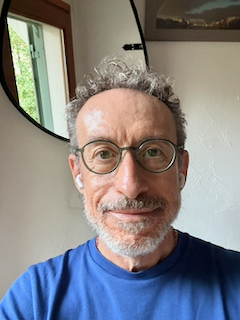
VIANELLI ALBERTO
Course Catalogue:
Communications
Overview
Alberto Vianelli, born in 1961, is currently a researcher and lecturer at the University of Insubria, Varese, Italy.
Ever since high school, his interests oscillated between biology and physics on one side and history of science on the other side. Thus, he had a biological education at the University of Milan, followed by a Post-Doc (1988-1991) at Tufts University Medical School, Boston and at MIT, Cambridge, Mass., followed by research stays in Hungary (1992-1993) and Japan (1999-2000); amore recently, in the period 2018-2024, he regularly attended in Paris seminars in History (of Science) at the École Normale Supérieure (Visiting Researcher, in 2018/19), the University of Paris 1 and at the École d’Hautes Études en Sciences Sociales, doing at the same time archival research in the National and Departmental Archives and several institutions (including libraries).
He taught the introductory course in Plant Physiology for 15 years. In addition, he taught modules in the Plant Ecophysiology course and taught Bioenergetics. He also taught courses and/or seminars focused on the history of science (biology in particular), on the scientific article and scientific publication in general, on research methodology in history, and the preparation of the bachelor’s thesis in humanities.
He started to work doing research at the bench in 1982, while still a young student, in molecular biology of development. He then moved on, in 1985, to the field of Biochemistry and biophysics of photosynthesis. In particular, he was interested in investigating regulatory mechanisms in the case of environmental light changes in quality and intensity, and light stress as well.
Having started to work with higher plants, also by means of a genetic approach isolating mutants in Arabidopsis, he then moved on in 1995 to green photosynthetic bacteria, hoping for a simpler, stemming from its primitive organization, model system. He was actually not new to research in microbiology, having studied earlier (1988-1991), while in the US, some T4 phage proteins though to be involved in DNA transport across the membrane and head/tail morphogenesis.
Continuing to be focused on the microbial world, and coming back to viruses, in 2007 he started to became interested in the so called overlapping genes (DNA regions coding for more than one protein) in viruses. After having tried to answer related to the features, the function, the evolution of these genes, more recently he started to investigate on the role of stochasticity (=randomness) in their expression.
His current research interests have actually maintained a wide scope, spanning, beside stochasticity in gene expression just mentioned, from the birth of scientific publishing in natural history in the revolutionary and Napoleonic era (1788-1815) in France in connection with sociability and politics, to the status of plants in biological theorizing and communication, rescuing Russian Plant Physiology ideas between XIX and XX century (The cosmic role of plants), to the history of molecular biology, particularly its applications to evolution, in the ‘70s between France and USA, with a confrontation between neo-lamarckism and neo-darwinism, still continuing today under a different guise. He is also interested, ever since 2000, in astrobiology, in particular on the integration of the "Cosmic Call" message, to communicate with possible extraterrestrials, with parameters and concepts of terrestrial biology to be defined as "essential". A role for history of biology, in this process, is not to be underestimated.
Attachment (CV)
Vianelli Alberto CVE_2026.pdf (CV completo in formato europeo)
Description
VIANELLI, Alberto – short curriculum vitae
Born: May 23rd, 1961, Milano, Italy Citizenship: Italian
He frequented the science-oriented high school (Liceo Scientifico) « X » in Milano, obtaining in 1980 a diploma with full marks (60/60)
Degrees
1988 University of Milan: Degree of Doctor (Tesi di Laurea) in Biological Sciences (3+2 yrs) (110/110 Magna cum Laude) having defended a thesis on "Quantum Efficiency of Photosystem I and its regulation by protein phosphorylation" (prof. G.Forti)
Present and past positions
2024-present : University researcher and Lecturer (Communicating Scientific Research in Companies and Institutions, 2024/25 ; Introduction to the use of the sources in Contemporary History, 2024/25 ; From 1789 to hippies : how revolutions change the sciences, 2025/26, 2026/27 ; Epidemics and Pandemics : new social and scientific paradigms to better understand and communicate, 2025/26 ; Other histories of the Atomic Bomb : 1933-1952, 2026/27 ; Science/Sciences : A Portrait, 2026/27))
2018/6 – 2019/10: Visiting researcher (chercheur invité), Centre Cavaillès (Histoire et Philosophie des Sciences) , Rèpublique des Savoirs, ENS, Paris
2009-2023: University researcher and Lecturer (Plant Physiology (until 2011/12); Bioenergetics (until 2013/14); Ideas and languages in Life Sciences (2014/15 – 2019/20); History and stories of life (2018/19-2020/21; The Scientific Article: history, construction, diffusion (2016/17-2022/23), Department of Theoretical and Applied Sciences, University of Insubria.
Previous positions and research activities (1988-2013/14) have been in the fields of plant physiology, microbiology and biophysics and took place, besides Varese (from 1994), at Tufts University (Boston, USA) in 1988-1991 (molecular biology of bacteriophage T4 morphogenesis), MIT (Cambridge, USA) in 1990-91 (molecular genetics of phosphate transport in E.coli), University of Milano in 1990-1997 (biophysical and genetical approaches to understanding light stress in higher plants), Biological Research Center of the Hungarian Academy of Sciences (Szeged, Hungary) in 1992 (a new light stress protection mechanism in chloroplasts), University of Padua in 1996-2005 (electronic magnetic resoance as a tool to understand light harvesting in green photosynthetic bacteria), University of Nagoya (Japan) in 2000 (characterization of a possible light stress protection mechanism in green photosynthetic bacteria).
Current (2018 – present) research activity
My research has since the second half of the 2010’s taken mainly an historical turn. A posteriori rationalizing, a privileged point of view in my studies is the analysis of the information flux between the “scientists” communicating to each other, with their patrons and/or political/social referents, more than to the question from them to the « public » (if such a clearly defined entity actually exists). The latter question is of course connected to the first one, but already well investigated in the literature. I am particularly interested in the question of problematic dissent in science, historically situated. Which, again, is not coincident of the well studied topic of the « controverses ».
0. My approach tries to make past and present dialogue between each other in a perspective taken from the historian Marc Bloch (the regressive approach), by looking at periods in which revolutions, political and cultural, via the sciences, lead to technological advances, like the industrial revolution (1) and, today, the biotechnological one (2) act as possible disruption factors:
1.”Past”. 1a. First of all, I am focusing on the period between XVIII and XIX century which is considered crucial for the emergence of science as we know it. I am currently focusing on the sociability of Naturalists and in particular of the Professors of the National Museum of Natural History in Paris. I am interested in the relationship between sociability and « scientific » publication, namely in the birth and the infance of the Muséum journal , the Annales du Muséum d’Histoire Naturelle, in the troubled transition period between Republic and Empire via the Consulate (1800-1804), as well as in his death (1809-1813). The focus is on the relations and networks as well on some individuals in the background. 1b. In connection to this, I am also studying the role and the economy of images and its consequences for the natural history/scientific publications of the period, (from a practical point of view) particularly those of animals, discussing it also within the frame of the rise of the “animal question” during the French Revolution, taken up by Frédéric Cuvier later.
2. “Present”. 2a. During my 2018/19 visit at Centre Cavaillès, ENS, Paris, I started conducting historical inquiries (published literature, archives, oral history) concerning, as a case study, the discovery of viral overlapping genes in the 1970’s and the debate in the same years on the origins of novelty in evolution involving French and American biologists. 2b. Connected to this, the recent demonstrations (2000’s)of the diffuse presence of overlapping genes not only in viruses but also in cellular organisms led me to investigate, in collaboration with informaticians and philosophers of biology, its consequences for the concept of genetic program, and in particular of the role of stochasticity in biology .
I am a member of the History of Science Society (HSS) and of the Italian Society for the History of Science - SISS (Italy) .
Language proficiency: Italian (Mother tongue) ; English (very good, both spoken and written) ; French (fluent, both spoken and written)
Recent publications
For those in the biological sciences, please see https://orcid.org/0000-0002-5206-3164
In biology/philosophy of science :
1)Casali M, F.Merlin and A.Vianelli (2025) « Dissecting stochasticity in translation: time in start codon selection as a case-study “. Philosophy, Theory and Practice in Biology (online only) (see point 2.b)
2) De Lerma Barbaro A., S.Balkhi, S.Giovannardi, A.Vianelli, D.Ribatti and L.Mortara (2025) “The Quest for Antibodies and Other Acquired Immune Receptors: A Historical Perspective”. International Journal of Immunogenetics 52(3), 125-134. (2.b)
Communications/seminars (mostly in the history of science) 2019-2025 :
1)« The illustrations (1802-1809) of Grignon (Paris Basin Eocene) fossils commissioned by Lamarck: a tool to understand how he coped with a rapidly changing science of nature” – 44th International Commission on the History of Geological Sciences Symposium, Varese-Como, 2-12 September 2019. (1a)
2)“From unique artworks to public reproductions in a scientific journal: the vélins and the first years of the Annales du Muséum National d’Histoire Naturelle” -European Society for the History of Science Conference. Bologna, 31/8 2/9/2020 (online) (1a)
3) “Marc Bloch, un historien entre métier et méthode”. Mois de l’épistémologie historique –Novembre 2020 – 6e Journées d’études sur l’épistémologie historique: Épistémologie historique et épistémologie de l’histoire. Paris, 12/11/2020 (en ligne) (0)
4) “Convergence entre « néo-lamarckiens » et « néo-darwiniens » sur la nécessité de comprendre les nouveaux phénotypes dans l’évolution. VIIe Congrès de la Société Française d’Histoire des Sciences et des Techniques. Montpellier, 21-23/4/2021 (en ligne) (2b)
5) « Le travail du peintre Nicolas Maréchal au Muséum d’histoire naturelle avec les animaux » - Journée d’étude « Animal montré, animal vu », Séminaire sur l’histoire mondiale des animaux, FMSH, Paris, 10/12/2021 (1a)
6) « Il naturalista, il pittore e il libraio: linee che si intersecano all’ombra del Muséum National d’Histoire Naturelle di Parigi fra 1800 e 1804 » - Convegno Internazionale della Società Italiana di Storia della Scienza, Catania, 30/5-1/6/2022. (1a)
7) « Convergence d’évolutionnistes dans les années 1970 à propos de l’importance de l’origine développementale des « nouveautés » - XIVe Congrès de la Société Française d’histoire des sciences et des techniques. Bordeaux, 19-21/4/2023 (2a)
8) “Stochasticité de la traduction de l’ARNm en protéines et ses possibles conséquences sur la cellule et ses modèles.” – Institut des systèmes complexes de Paris et Ile-de-France (ISC-PIF), Paris, 16/5/2023. (2b)
9) « Le changement de vision de François Jacob dans les années 1970 : de l’histoire de l’hérédité à l’historicité de l’évolution » - Séminaire Cavaillès “Histoire et Philosophie du vivant“ – École Normale Supérieure, Paris, 13/12/2023. (2a)
10) “The working library of a scientist as a kaleidoscope: the case of François Jacob” - Conference “Libraries of science” – Royal Society, London, 14/3/2025 (2a)
11) (avec N.Queyroux) “La bibliothèque de François Jacob”. Journée sur les différents fonds du Centre documentaire du CAPHÉS, Paris, 7/11/2025
12) « Stochasticity in cellular translation : opening and closing (a) Pandora’s Box ». Trends in Biomolecular Sciences, Università degli Studi dell’Insubria, Varese, 3/12/2025.
13) « Et si considérer enfin la photosynthèse pouvait constituer un autre point de vue
dans le débat sur la comparaison entre plantes et animaux ? » - Atelier PHIBE (Philosophie, Biologie, Écologie), École Normale Supérieure, Paris, 9/12/2025
14) "Les couleurs de l’espace : la lumière, la vie, les plantes". Atelier ESPACE, École Normale Supérieure, Paris, 15/12/2025
In preparation (2026-27)
Queyroux, N. et A.Vianelli – “La bibliothèque de François Jacob au Caphés”.
Vianelli, A. - "Alexander von Humboldt (1769-1859) and Rachel Carson (1907-1964): a queer gaze to catch the complex interrelations in nature ?” (short essay)
Vianelli, A. – “Where have all the ducks gone? Vaucanson’s automaton and natural history at the end of XVIII century in France” (short essay)
Vianelli, A – « From « The logic of life » to « Evolution and tinkering » : sketch of an american itinerary (1967-1976) of François Jacob ».
Vianelli, A. « Convergence d’évolutionnistes dans les années 1970’s à propos de l’importance de l’origine développementale des « nouveautés ».
Vianelli, A. – “Overlapping genes in viruses: story of an object in search for a discovery.”
Born: May 23rd, 1961, Milano, Italy Citizenship: Italian
He frequented the science-oriented high school (Liceo Scientifico) « X » in Milano, obtaining in 1980 a diploma with full marks (60/60)
Degrees
1988 University of Milan: Degree of Doctor (Tesi di Laurea) in Biological Sciences (3+2 yrs) (110/110 Magna cum Laude) having defended a thesis on "Quantum Efficiency of Photosystem I and its regulation by protein phosphorylation" (prof. G.Forti)
Present and past positions
2024-present : University researcher and Lecturer (Communicating Scientific Research in Companies and Institutions, 2024/25 ; Introduction to the use of the sources in Contemporary History, 2024/25 ; From 1789 to hippies : how revolutions change the sciences, 2025/26, 2026/27 ; Epidemics and Pandemics : new social and scientific paradigms to better understand and communicate, 2025/26 ; Other histories of the Atomic Bomb : 1933-1952, 2026/27 ; Science/Sciences : A Portrait, 2026/27))
2018/6 – 2019/10: Visiting researcher (chercheur invité), Centre Cavaillès (Histoire et Philosophie des Sciences) , Rèpublique des Savoirs, ENS, Paris
2009-2023: University researcher and Lecturer (Plant Physiology (until 2011/12); Bioenergetics (until 2013/14); Ideas and languages in Life Sciences (2014/15 – 2019/20); History and stories of life (2018/19-2020/21; The Scientific Article: history, construction, diffusion (2016/17-2022/23), Department of Theoretical and Applied Sciences, University of Insubria.
Previous positions and research activities (1988-2013/14) have been in the fields of plant physiology, microbiology and biophysics and took place, besides Varese (from 1994), at Tufts University (Boston, USA) in 1988-1991 (molecular biology of bacteriophage T4 morphogenesis), MIT (Cambridge, USA) in 1990-91 (molecular genetics of phosphate transport in E.coli), University of Milano in 1990-1997 (biophysical and genetical approaches to understanding light stress in higher plants), Biological Research Center of the Hungarian Academy of Sciences (Szeged, Hungary) in 1992 (a new light stress protection mechanism in chloroplasts), University of Padua in 1996-2005 (electronic magnetic resoance as a tool to understand light harvesting in green photosynthetic bacteria), University of Nagoya (Japan) in 2000 (characterization of a possible light stress protection mechanism in green photosynthetic bacteria).
Current (2018 – present) research activity
My research has since the second half of the 2010’s taken mainly an historical turn. A posteriori rationalizing, a privileged point of view in my studies is the analysis of the information flux between the “scientists” communicating to each other, with their patrons and/or political/social referents, more than to the question from them to the « public » (if such a clearly defined entity actually exists). The latter question is of course connected to the first one, but already well investigated in the literature. I am particularly interested in the question of problematic dissent in science, historically situated. Which, again, is not coincident of the well studied topic of the « controverses ».
0. My approach tries to make past and present dialogue between each other in a perspective taken from the historian Marc Bloch (the regressive approach), by looking at periods in which revolutions, political and cultural, via the sciences, lead to technological advances, like the industrial revolution (1) and, today, the biotechnological one (2) act as possible disruption factors:
1.”Past”. 1a. First of all, I am focusing on the period between XVIII and XIX century which is considered crucial for the emergence of science as we know it. I am currently focusing on the sociability of Naturalists and in particular of the Professors of the National Museum of Natural History in Paris. I am interested in the relationship between sociability and « scientific » publication, namely in the birth and the infance of the Muséum journal , the Annales du Muséum d’Histoire Naturelle, in the troubled transition period between Republic and Empire via the Consulate (1800-1804), as well as in his death (1809-1813). The focus is on the relations and networks as well on some individuals in the background. 1b. In connection to this, I am also studying the role and the economy of images and its consequences for the natural history/scientific publications of the period, (from a practical point of view) particularly those of animals, discussing it also within the frame of the rise of the “animal question” during the French Revolution, taken up by Frédéric Cuvier later.
2. “Present”. 2a. During my 2018/19 visit at Centre Cavaillès, ENS, Paris, I started conducting historical inquiries (published literature, archives, oral history) concerning, as a case study, the discovery of viral overlapping genes in the 1970’s and the debate in the same years on the origins of novelty in evolution involving French and American biologists. 2b. Connected to this, the recent demonstrations (2000’s)of the diffuse presence of overlapping genes not only in viruses but also in cellular organisms led me to investigate, in collaboration with informaticians and philosophers of biology, its consequences for the concept of genetic program, and in particular of the role of stochasticity in biology .
I am a member of the History of Science Society (HSS) and of the Italian Society for the History of Science - SISS (Italy) .
Language proficiency: Italian (Mother tongue) ; English (very good, both spoken and written) ; French (fluent, both spoken and written)
Recent publications
For those in the biological sciences, please see https://orcid.org/0000-0002-5206-3164
In biology/philosophy of science :
1)Casali M, F.Merlin and A.Vianelli (2025) « Dissecting stochasticity in translation: time in start codon selection as a case-study “. Philosophy, Theory and Practice in Biology (online only) (see point 2.b)
2) De Lerma Barbaro A., S.Balkhi, S.Giovannardi, A.Vianelli, D.Ribatti and L.Mortara (2025) “The Quest for Antibodies and Other Acquired Immune Receptors: A Historical Perspective”. International Journal of Immunogenetics 52(3), 125-134. (2.b)
Communications/seminars (mostly in the history of science) 2019-2025 :
1)« The illustrations (1802-1809) of Grignon (Paris Basin Eocene) fossils commissioned by Lamarck: a tool to understand how he coped with a rapidly changing science of nature” – 44th International Commission on the History of Geological Sciences Symposium, Varese-Como, 2-12 September 2019. (1a)
2)“From unique artworks to public reproductions in a scientific journal: the vélins and the first years of the Annales du Muséum National d’Histoire Naturelle” -European Society for the History of Science Conference. Bologna, 31/8 2/9/2020 (online) (1a)
3) “Marc Bloch, un historien entre métier et méthode”. Mois de l’épistémologie historique –Novembre 2020 – 6e Journées d’études sur l’épistémologie historique: Épistémologie historique et épistémologie de l’histoire. Paris, 12/11/2020 (en ligne) (0)
4) “Convergence entre « néo-lamarckiens » et « néo-darwiniens » sur la nécessité de comprendre les nouveaux phénotypes dans l’évolution. VIIe Congrès de la Société Française d’Histoire des Sciences et des Techniques. Montpellier, 21-23/4/2021 (en ligne) (2b)
5) « Le travail du peintre Nicolas Maréchal au Muséum d’histoire naturelle avec les animaux » - Journée d’étude « Animal montré, animal vu », Séminaire sur l’histoire mondiale des animaux, FMSH, Paris, 10/12/2021 (1a)
6) « Il naturalista, il pittore e il libraio: linee che si intersecano all’ombra del Muséum National d’Histoire Naturelle di Parigi fra 1800 e 1804 » - Convegno Internazionale della Società Italiana di Storia della Scienza, Catania, 30/5-1/6/2022. (1a)
7) « Convergence d’évolutionnistes dans les années 1970 à propos de l’importance de l’origine développementale des « nouveautés » - XIVe Congrès de la Société Française d’histoire des sciences et des techniques. Bordeaux, 19-21/4/2023 (2a)
8) “Stochasticité de la traduction de l’ARNm en protéines et ses possibles conséquences sur la cellule et ses modèles.” – Institut des systèmes complexes de Paris et Ile-de-France (ISC-PIF), Paris, 16/5/2023. (2b)
9) « Le changement de vision de François Jacob dans les années 1970 : de l’histoire de l’hérédité à l’historicité de l’évolution » - Séminaire Cavaillès “Histoire et Philosophie du vivant“ – École Normale Supérieure, Paris, 13/12/2023. (2a)
10) “The working library of a scientist as a kaleidoscope: the case of François Jacob” - Conference “Libraries of science” – Royal Society, London, 14/3/2025 (2a)
11) (avec N.Queyroux) “La bibliothèque de François Jacob”. Journée sur les différents fonds du Centre documentaire du CAPHÉS, Paris, 7/11/2025
12) « Stochasticity in cellular translation : opening and closing (a) Pandora’s Box ». Trends in Biomolecular Sciences, Università degli Studi dell’Insubria, Varese, 3/12/2025.
13) « Et si considérer enfin la photosynthèse pouvait constituer un autre point de vue
dans le débat sur la comparaison entre plantes et animaux ? » - Atelier PHIBE (Philosophie, Biologie, Écologie), École Normale Supérieure, Paris, 9/12/2025
14) "Les couleurs de l’espace : la lumière, la vie, les plantes". Atelier ESPACE, École Normale Supérieure, Paris, 15/12/2025
In preparation (2026-27)
Queyroux, N. et A.Vianelli – “La bibliothèque de François Jacob au Caphés”.
Vianelli, A. - "Alexander von Humboldt (1769-1859) and Rachel Carson (1907-1964): a queer gaze to catch the complex interrelations in nature ?” (short essay)
Vianelli, A. – “Where have all the ducks gone? Vaucanson’s automaton and natural history at the end of XVIII century in France” (short essay)
Vianelli, A – « From « The logic of life » to « Evolution and tinkering » : sketch of an american itinerary (1967-1976) of François Jacob ».
Vianelli, A. « Convergence d’évolutionnistes dans les années 1970’s à propos de l’importance de l’origine développementale des « nouveautés ».
Vianelli, A. – “Overlapping genes in viruses: story of an object in search for a discovery.”
Collaborates with
Other research activities (2)
Communicating and Representing the Earth: Structures and Phenomena in the Italian Context (17th - 19th century)
Progetti di Ricerca Nazionali - MIUR - PRIN
Project
participant
2023
24 months
Material and Visual Culture of Science: A longue durée Perspective
Progetti di Ricerca Nazionali - MIUR - PRIN
Project
participant
2020
36 months
No Results Found
Publications (33)
Research and teaching at institutions (5)
CNR-Short term fellowship presso il Department of Physics, Laboratorio del Prof. Shigeru Itoh. at: Nagoya University - Visiting Researcher
(01/06/2000 - 30/06/2000)20000601
Visiting scientist presso il Biological Research Center, Szeged, laboratorio del prof. Gyozo Garab. at: Hungarian Academy of Sciences - Visiting Researcher
(01/11/1992 - 30/11/1992)19921101
Visiting researcher presso il Department of Molecular Biology and Microbiology, Tufts University Medical School, laboratorio del prof. Edward Goldberg at: Tufts University - Visiting Researcher
(01/10/1990 - 31/03/1991)19901001
Research affiliate c/o il Department of Biology, laboratorio della Prof. Anna Maria Torriani-Gorini at: Massachusetts Institute of Technology - Visiting Researcher
(01/02/1990 - 31/03/1991)19900201
Research associate ℅ il Department of Molecular Biology and Microbiology, Tufts University Medical School, laboratorio del prof. Edward Goldberg. at: Tufts University - Ricercatore/Ricercatrice all’estero
(01/11/1988 - 30/06/1990)19881101
No Results Found
Doctoral college (11)
Università degli Studi INSUBRIA Varese-Como -
DIRITTO E SCIENZE UMANE-2013
(cycle: 29 - Year: 2013
2013
)
Università degli Studi INSUBRIA Varese-Como -
BIOLOGIA CELLULARE E MOLECOLARE-2012
(cycle: 28 - Year: 2012
2012
)
Università degli Studi INSUBRIA Varese-Como -
BIOLOGIA CELLULARE E MOLECOLARE-2011
(cycle: 27 - Year: 2011
2011
)
Università degli Studi INSUBRIA Varese-Como -
BIOLOGIA CELLULARE E MOLECOLARE-2010
(cycle: 26 - Year: 2010
2010
)
Università degli Studi INSUBRIA Varese-Como -
BIOLOGIA CELLULARE E MOLECOLARE-2009
(cycle: 25 - Year: 2009
2009
)
Università degli Studi INSUBRIA Varese-Como -
BIOLOGIA CELLULARE E MOLECOLARE-2008
(cycle: 24 - Year: 2008
2008
)
Università degli Studi INSUBRIA Varese-Como -
BIOLOGIA CELLULARE E MOLECOLARE-2007
(cycle: 23 - Year: 2007
2007
)
Università degli Studi INSUBRIA Varese-Como -
BIOLOGIA CELLULARE E MOLECOLARE-2006
(cycle: 22 - Year: 2006
2006
)
Università degli Studi INSUBRIA Varese-Como -
BIOLOGIA CELLULARE E MOLECOLARE-2005
(cycle: 21 - Year: 2005
2005
)
Università degli Studi INSUBRIA Varese-Como -
BIOLOGIA EVOLUZIONISTICA E DELLO SVILUPPO-2004
(cycle: 20 - Year: 2004
2004
)
Università degli Studi INSUBRIA Varese-Como -
BIOLOGIA EVOLUZIONISTICA E DELLO SVILUPPO-2003
(cycle: 19 - Year: 2003
2003
)
No Results Found
Courses (2)
SUT0395 - SEMINARIO: DAL 1789 AGLI HIPPIES: COME LE RIVOLUZIONI CAMBIANO LE SCIENZE
Secondo Quadrimestre (22/02/2027 - 19/03/2027)
- 2026
4 CFU
32 hours
SUT0416 - SEMINAR: OTHER HISTORIES OF THE ATOMIC BOMB: 1933-1952
Primo Quadrimestre (21/09/2026 - 20/10/2026)
- 2026
2 CFU
16 hours
No Results Found
Third Mission (3)
Organizzazione di iniziative di valorizzazione, consultazione e condivisione della ricerca (Organizzatore/Organizzatrice, Relatore/Relatrice)
- Conferenza "Evoluzione umana guidata dall'uomo?" per il Darwin Day 2023
Circo UAAR Milano, Via Zurigo 22, Milano (02/03/2023 - 02/03/2023) 20230302
DIPARTIMENTO DI SCIENZE TEORICHE E APPLICATE
Organizzazione di iniziative di valorizzazione, consultazione e condivisione della ricerca (Relatore/Relatrice)
- Scienza & Fantascienza 2020 - Non solo virus: i nemici invisibili
Università degli Studi dell'Insubria (14/10/2020 - 25/11/2020) 20201014
DIPARTIMENTO DI SCIENZE UMANE E DELL’INNOVAZIONE PER IL TERRITORIO
Organizzazione di iniziative di valorizzazione, consultazione e condivisione della ricerca (Relatore/Relatrice)
- Tavola rotonda dal titolo "A proposito di un libro bestiale"
aula magna Collegio Cattaneo, Università degli Studi dell'Insubria (19/12/2019 - 19/12/2019) 20191219
DIPARTIMENTO DI SCIENZE TEORICHE E APPLICATE
No Results Found